
Arlington Business CPA AlternativeCPA Arlington. The bunched month still closes.
We close the month when the cash arrives in bunches, set payroll up on a provider you still log in to, and prepare the return with Steven Palmieri, the Tax CFO who has read every one of those months.
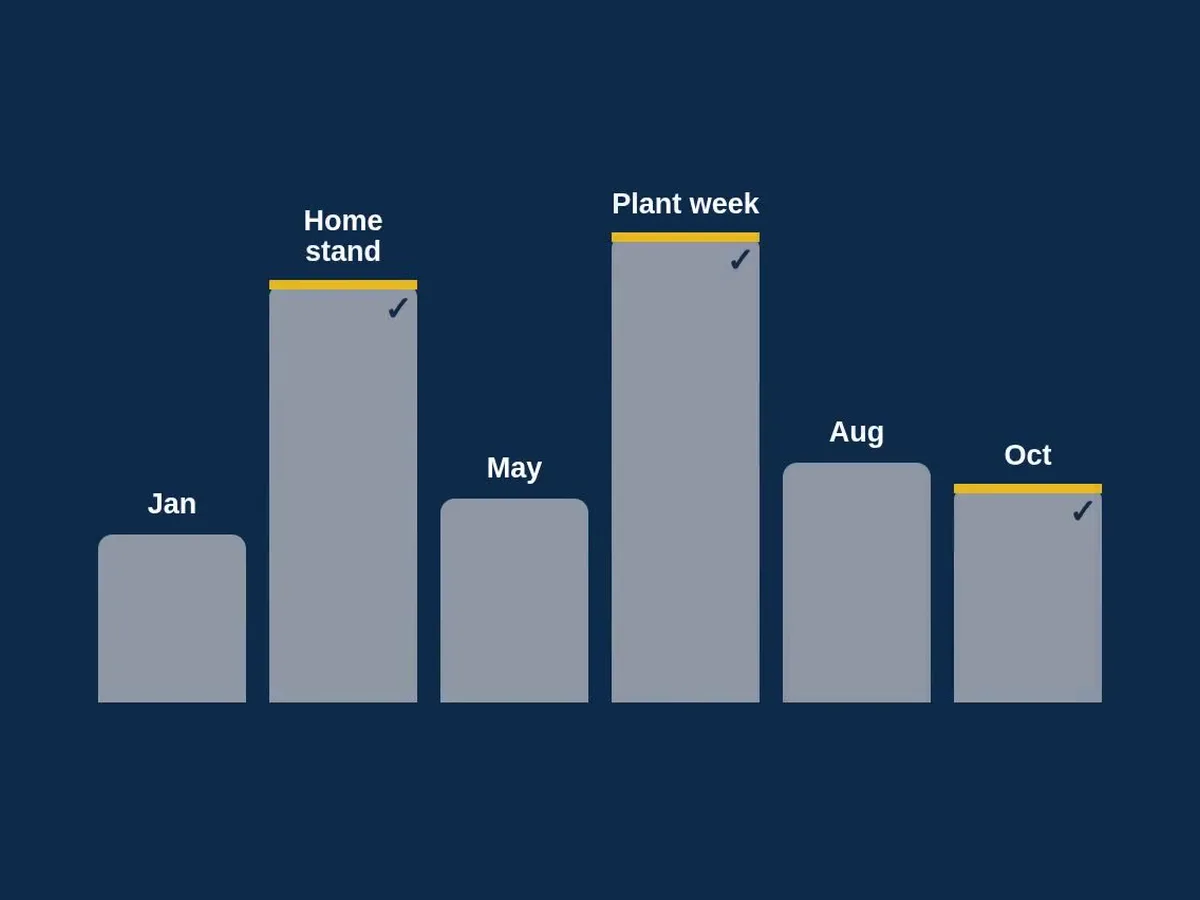
Your books this year

You will be talking to the Steven Palmieri practice.


Busy weekends
A Friday night under the roof at Globe Life Field is as welcome to us as it is to you, and those deposits still belong in the month the games were played.
Click to see the stands ›Tap to see the stands ›
Plant weeks
When a supplier's release lands we feel that week the same way you do, and that pile still closes on the same day as a quiet week.
Click to see the week ›Tap to see the week ›
A closed month
We can take a lawn spot at Levitt Pavilion the same as you, and sales from that concert stay dated to the month of the show.
Click to see the close ›Tap to see the close ›
Choices before year end
Since 2009 the Cowboys have filled the lots at AT&T Stadium, and a Sunday there is a Sunday we feel along with you. October is when that weekend can still change a choice.
Click to see the choices ›Tap to see the choices ›
The return
April reads the loud weeks we already put away, so the form is a summary of months that already closed.
Click to see the return ›Tap to see the return ›
The yard list
A work truck and the yard equipment need a life on the asset list before October closes, and we build that list from the invoices.
Click to see the list ›Tap to see the list ›Name the week that is still open
Six moments in this year. Open one.
1A plant release bunches the deposits
We put that week inside the month it belongs to.
A parts vendor can look rich on a Friday and ordinary by the twentieth, and the close has to show both.
2A home stand fills one weekend
We mark the games inside the month they were played.
Hotel nights and vendor deposits from the same weekend still belong on that month's statements.
3April asks for the yard list
We build the asset list before Tarrant has to guess.
Tarrant wants the yard list in April, and a written ask can push that filing into May.
4The twentieth still arrives
We have the sales report ready whether the week was loud or quiet.
A slow week does not move the sales-tax date, and a busy week does not either.
5October can still change the year
We read profit while a retirement plan and owner pay are still choices.
Once December ends, a retirement amount and owner pay are history the return can only describe.
6The return should already agree
The return is typed from months a plant week and a home stand already passed through.
Card batches and loan balances were tied while those months were still open, so spring is a reading.
Tax CFO
Steven Palmieri is named here as the Tax CFO. The month we open together is the one where the cash arrived in a pile.
Bring the week that bunched. We date that week inside its month.
Tell us the week
You will be talking to the Steven Palmieri practice.
What a bunched month actually contains
The assembly plant is the largest private employer in this city. A release week still has to be put away on the ordinary day, because the bank does not grade the schedule. Steven Palmieri is the Tax CFO for this work, and the Entrepreneur's CFO, for a year in Arlington that arrives in bunches.
Owners around Arlington already know the year does not arrive in twelve equal slices. A home stand packs hotels, lots, and vendor windows into a few nights. A plant release does the same thing on a weekday, with parts and overtime landing together. The bank shows both. A report that averages them into a smooth month hides the week you actually lived.
We keep the week visible inside the month. Deposits are dated. A big Friday is not smeared across the next thirty days to make a chart look calm. When we sit down, you can point at the stand or the release and see it on the statement. That is the relief in a clean close. The worry is the opposite, a letter that asks for a number the file cannot support because the weeks were never put away.
The same habit covers a quiet week. Quiet does not get skipped. A month with no game and no release still gets a close, because the twentieth does not check the schedule before it arrives.
Levitt Pavilion still puts on more than fifty free concerts a year, and a lawn night there does not get its own close date. The roof over Globe Life Field can open, and the bank still dates those tickets to the month they were sold in.
What you have in hand after a close
A closed month here means the cash matches the bank, the cards match the statements, and the loan balances match the lenders. Categories stay put from one month to the next, so a change in the total means the work changed, not the labels. Open questions are a short list, not a drawer.
You also get a simple pack. A profit statement, a balance sheet, and a note in plain words about what moved. We do not decorate it. If something is still unmatched, the note says so, and it says what we need from you. Nothing sits in a question pile for half a year.
Payroll is set up on a provider, and you keep the login. We map the accounts so payday lands in the right month. Approving the hours and sending the run stay on your side of the provider login. That split is on purpose. You can see the people and the hours. We can see that the books agree with what was paid.
What October can still change
By October the shape of the year is visible. Profit is no longer a guess from January. A retirement plan for a one-owner shop can still be opened, and the amount follows the profit you actually made. Owner pay, if the entity pays you as an employee, is still a choice in that month. January can describe those choices. It cannot reopen them.
The estimate talk starts from profit already sitting in the months this year has closed. We do not divide last year's bill by four and call it a plan. If a big stand is still ahead, we say so. If the plant schedule is light, we say that too. The point of the conversation is a number you can live with in April, not a surprise.
We also look at whether an S election even belongs in the conversation. There is a profit level where it starts to matter, and it is different if you already earn wages somewhere else. We do the reading before anyone files a form. Nobody files that election until this year's profit has been read from closed months.
How a call with us goes
You bring the oldest open month, or you tell us there isn't one and we start from the bank. We look at the same screen. Shared books, a video call, a calendar link. The month can be closed while you stay in the shop, because the file is on the shared screen.
If the file needs an audit, a review, or a compilation, that work is not ours, and we will say so on the first call and point you to a firm that can sign. Everything else you came for, the books, the statements, the setup of payday, and the return, is the work.
The first call is a reading, not a pitch deck. A poor fit gets a plain no before anyone talks about a monthly rhythm. If we are the right fit, the next step is the oldest month, then the one after it, until the year is something you can hand to the return without reconstructing it.